Pea Pesto Orzo with Asparagus
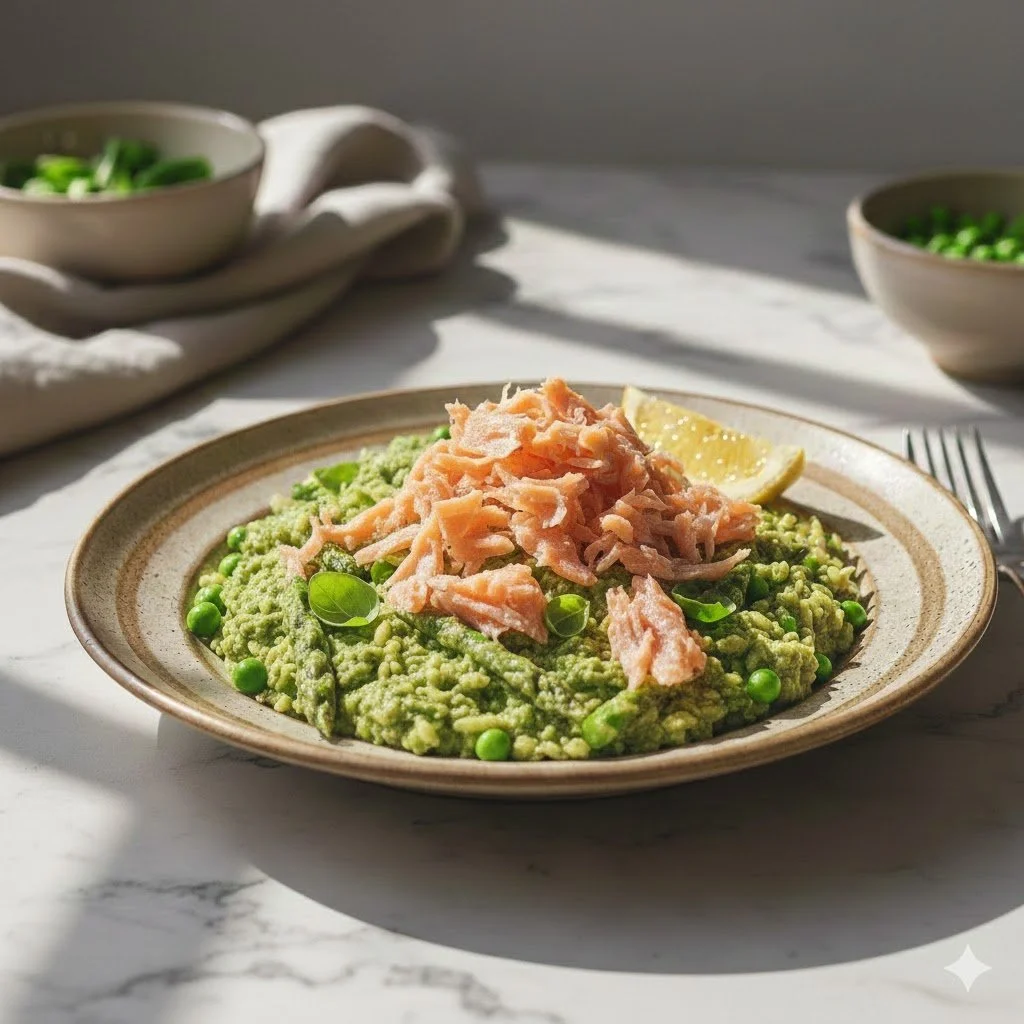
This is a fresh, creamy orzo dish built around a vibrant pea pesto, with tender asparagus and flakes of slow oven-baked salmon on top. It’s light but filling, simple but layered, and one of those meals that feels both nourishing and satisfying.
Why You’ll Love It
Inspired by ZOE’s gut-friendly recipe
Creamy without being heavy
High in fibre and plant diversity
Easy to digest and easy to make
Beautiful texture and colour on camera
Ingredients (serves 2–3)
Orzo
2 dl orzo pasta (¾ cup)
Water and salt, for cooking
Asparagus
1 bunch asparagus
1 tbsp extra virgin olive oil
Pinch of sea salt
Pea pesto
2 dl frozen peas (¾ cup)
1 dl Greek yoghurt (½ cup)
1 small garlic clove
½ dl fresh basil (¼ cup)
½ dl fresh parsley (¼ cup)
½ dl finely grated parmesan (¼ cup)
½ dl extra virgin olive oil (¼ cup)
Juice of ½ lemon
Sea salt and freshly cracked black pepper
Whole peas
½ dl frozen peas (¼ cup), blanched
To finish
Slow oven-baked salmon, flaked
Extra parmesan, optional
How to
Cook the orzo
Cook the orzo in well-salted boiling water according to package instructions until just tender. Drain and set aside, reserving a small splash of the cooking water.Blanch the peas
Blanch all the peas in boiling water for 1–2 minutes until bright green. Drain and cool briefly. Set aside ½ dl (¼ cup) to keep whole for texture.Blend the pesto
Add the remaining peas to a blender or food processor along with Greek yoghurt, garlic, basil, parsley, parmesan, olive oil, lemon juice, salt, and pepper. Blend until smooth and vibrant.Prepare the asparagus
Trim the woody ends and cut the asparagus into 3–4 cm pieces. Toss with olive oil and a pinch of salt, then roast at 200 °C (400 °F) for 10–12 minutes until tender and lightly golden.Combine
Fold the pea pesto through the warm orzo. Add a splash of the reserved pasta water if needed to loosen the sauce.Finish the dish
Gently fold in the roasted asparagus and the reserved whole peas. Top with flaky salmon and extra parmesan if using.
Anti-Inflammatory Notes
Peas and asparagus → fibre that supports gut bacteria
Fresh herbs → polyphenols that support inflammation balance
Greek yoghurt → protein and fermentation for digestion
Salmon → omega-3 fats that support inflammation balance